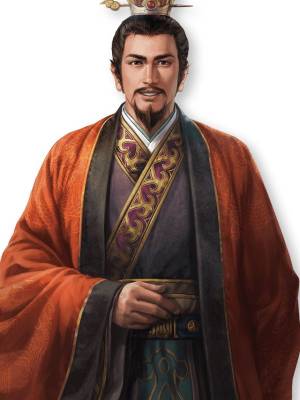
Liu Bei (刘备)
Liu Bei, the founding emperor of Shu-Han, is one of the most emblematic figures of the Three Kingdoms era. Widely celebrated for his benevolence, humility, and compassion, Liu Bei built his political legitimacy on a moral foundation rather than overwhelming military strength. According to historical records, he claimed descent from the imperial Liu clan of the Han, a lineage that he continuously used to reinforce his authority and gather popular support. Throughout his career, Liu Bei was known for attracting talented individuals through sincere personal relationships, forming close bonds with figures such as Guan Yu, Zhang Fei, and later Zhuge Liang. His leadership style emphasized righteousness and loyalty, contrasting with the more authoritarian rule of Cao Cao. Although Liu Bei’s later military campaigns were marked by significant setbacks, especially after the loss of Jingzhou, his legacy persisted through Shu’s administrative ideals and cultural symbolism, casting him as the archetype of the humane and virtuous ruler in Chinese historical imagination.

Guan Yu (关羽)
Guan Yu, famed general and sworn brother of Liu Bei, embodies the Confucian virtues of loyalty, righteousness, and unwavering moral integrity. His martial achievements, most notably the defeat of enemy reinforcements during the Battle of Fancheng and his control of key strategic regions, earned him the legendary reputation of “a warrior who shook the land.” Although the Records of the Three Kingdoms offers a more restrained depiction, later folklore and the Romance of the Three Kingdoms elevated Guan Yu into a near-mythic figure. His refusal to betray Liu Bei despite lavish treatment from Cao Cao became an enduring cultural symbol of personal loyalty over political advantage. Posthumously deified as “Guandi,” he became a protector figure in state cults and folk religion alike, representing justice and steadfastness. His legacy extends into modern Chinese identity, where he remains one of the most culturally significant and widely recognized figures of the era.

Zhuge Liang (诸葛亮)
Zhuge Liang, Chancellor and chief strategist of Shu-Han, is perhaps the most intellectually celebrated figure of the Three Kingdoms period. Known for his brilliance, foresight, and tireless dedication, he exemplifies the ideal of the sage-official in traditional Chinese political philosophy. Zhuge Liang entered Liu Bei’s service after the famous “Three Visits to the Thatched Cottage,” where he presented the Longzhong Plan—a comprehensive strategic vision that shaped Shu’s geopolitical ambitions for decades. As a statesman, he implemented agricultural reforms, improved legal administration, and emphasized meritocratic governance. As a military commander, he led multiple northern expeditions against Wei, guided by both strategic innovation and strict discipline, although he ultimately could not achieve the reunification of China. His posthumous writings, including the “Chu Shi Biao,” further strengthened his reputation as a loyal, selfless servant of the state. Over time, Zhuge Liang evolved into a cultural symbol of wisdom and devotion, revered across literature, theater, and popular imagination.